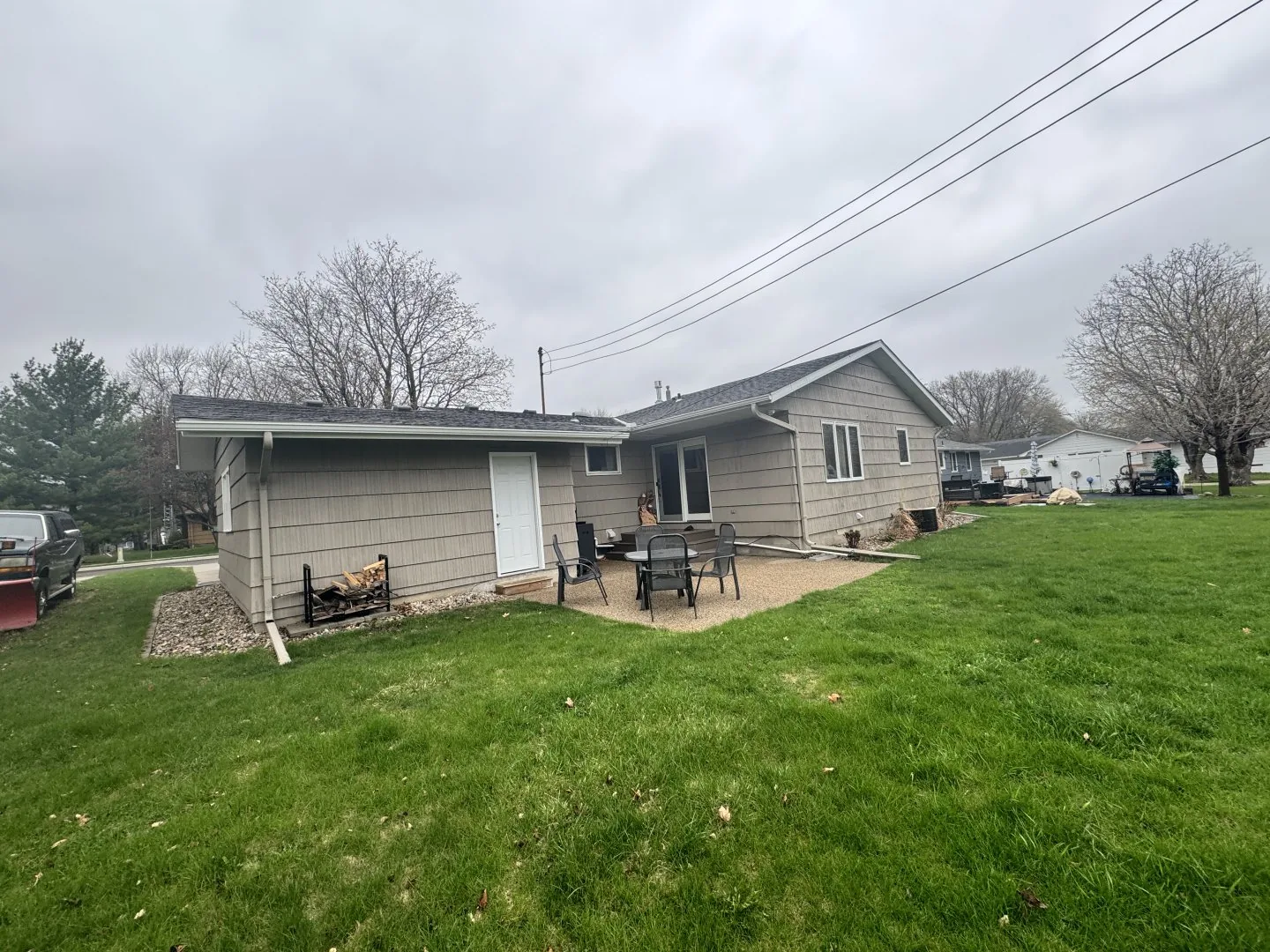
brick foursquare
The brick American Foursquare is one of the most recognizable house types in Faribault's older neighborhoods. Built mostly between about 1900 and the
The brick American Foursquare is one of the most recognizable house types in Faribault's older neighborhoods. Built mostly between about 1900 and the early 1930s, these square, two-and-a-half-story homes were a practical answer to a cold Minnesota climate: a boxy footprint that holds heat, a full-width front porch, a low hipped roof with a center dormer, and four roughly equal rooms on each floor. In a river town shaped by the Faribault Woolen Mill and the limestone and brick commercial buildings downtown, masonry Foursquares were a statement of permanence. More than a century later, that masonry, those stone foundations, and the original mechanical systems all need an honest, type-specific look before you buy. This page explains what we actually inspect on a brick Foursquare in Faribault and the surrounding Rice County area where the Cannon and Straight rivers meet, in plain English and with no inflated claims. We deliver a full written report within 24 hours of the inspection.
Solid brick walls, mortar joints, and the freeze-thaw cycle
Many Faribault Foursquares were built with true structural masonry rather than a thin brick veneer over a wood frame. That changes how the walls behave. Solid brick depends on sound mortar joints, and after a century of southern Minnesota winters the original lime mortar is often eroded, cracked, or has been patched with the wrong material. We look closely at the joints, because hard modern Portland-cement repointing on a soft old brick wall can trap moisture and spall the brick faces during freeze-thaw. We check for stair-step cracking that signals foundation movement, bulging or leaning wall sections, and prior repointing quality. On homes with parging or a painted brick exterior we note where coatings may be holding moisture inside the wall. Chimneys get specific attention: old interior brick chimneys often show deterioration above the roofline, missing crowns, and liner concerns, especially where a modern furnace was vented into a flue never sized for it.
Stone and early foundations under a masonry house
A heavy brick Foursquare sits on a foundation that was usually built from local limestone rubble or early poured concrete, and that foundation is carrying real load. In the basements of pre-1950 Faribault homes we routinely find stone-and-mortar walls with loose or washed-out mortar, horizontal or diagonal cracking, and signs of past water entry. Because these neighborhoods sit in the Cannon and Straight river valley, the surrounding clay soils swell and shrink with moisture and put seasonal pressure on foundation walls. We document foundation cracks, inward bowing, efflorescence and dampness staining, deteriorated mortar, and any sistered or jacked framing in the basement. We also look at the connection between the masonry walls above and the foundation below, since a settling corner shows up as cracking in the brick long before anyone notices it inside.
Knob-and-tube, fuses, and dated wiring
Foursquares of this era were wired for a fraction of today's electrical demand. It is common to find original knob-and-tube wiring still in service, a small fuse panel, ungrounded two-prong outlets, and a tangle of additions made by previous owners over many decades. We open and evaluate the panel, check the service capacity, look for knob-and-tube and cloth-insulated wiring in the basement and attic, test a representative sample of outlets for grounding and proper wiring, and flag double-tapped breakers, missing GFCI protection in kitchens and baths, and amateur splices. None of this means the house is unsafe to own, but it tells you what an insurer may ask about and what an electrician should prioritize. We report what we find plainly so you can budget, not to scare you.
Roof, dormer, and the full-width porch
The Foursquare's low hipped roof and center dormer are efficient but have specific weak points in Minnesota winters. The shallow pitch and the valleys around the dormer are prone to ice dams, where snowmelt refreezes at the cold eave and backs water up under the shingles. We check attic insulation and ventilation, look for staining and past leak repairs around the dormer and chimney, and note the condition and age of the roof covering. The signature full-width front porch is its own structure: porch roofs on these homes often have flat or low-slope sections that leak, and the porch piers, deck, and posts may have rot or settlement. We inspect porch framing and supports, flashing where the porch ties into the main wall, and any enclosed or three-season porch additions that were added later.
Radon, sewer laterals, and aging mechanicals
Rice County is in a part of Minnesota where elevated indoor radon is common, and a deep, often unfinished Foursquare basement with a stone or early-concrete floor is exactly the kind of space where radon collects. We recommend radon testing on these homes and can arrange it. The buried sewer service is another real concern: a home built before the 1950s frequently still has a clay-tile (vitrified clay) sewer lateral running to the city main, and clay laterals crack and are invaded by tree roots over the decades. A sewer scope is the only way to see that line, and we strongly suggest one before closing. Inside, we evaluate the heating system, water heater, and any remaining galvanized or lead-jointed plumbing. Many of these homes started with a gravity furnace and have been converted; we report the current equipment's condition, age, and safe operation, and note where a single old system is doing the work of the whole house.
What we watch for
- Eroded or improperly repointed mortar joints, stair-step cracking, and spalled brick on solid-masonry walls
- Stone or early-concrete foundations with washed-out mortar, bowing, or water staining in the basement
- Knob-and-tube and cloth wiring, undersized fuse or service panels, and ungrounded outlets
- Ice-dam damage and leaks around the center dormer, valleys, and chimney on the low hipped roof
- Full-width porch rot, settling piers, and leaking flat porch-roof sections
- Original brick chimney deterioration, missing crown, and improperly vented modern furnace flues
- Elevated radon potential in a deep, unfinished masonry basement (testing recommended)
- Clay-tile sewer laterals subject to cracks and root intrusion (sewer scope recommended)
- Aging or converted heating systems and remaining galvanized or lead-jointed plumbing
Buying a brick Foursquare in Faribault or anywhere in Rice County? Get an inspection that actually understands century-old masonry, stone foundations, and historic-district mechanicals. Call us at (507) 721-3120 or build a free instant quote online in about a minute. We deliver a clear, photo-documented written report within 24 hours, with radon testing and sewer scopes available so you know exactly what you are buying before you close.
Get Your Instant QuoteMore by type.
See your price in under a minute.
Build your quote and book your Faribault-area inspection online — or call (507) 721-3120.